

The Value of Community
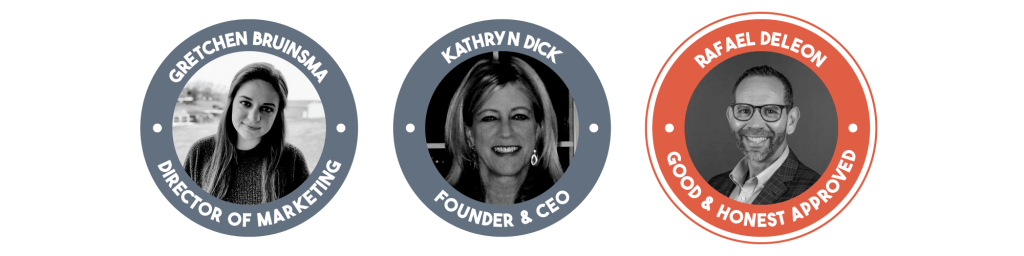
A conversation with Rafael DeLeon and Kathy Dick.
By Gretchen Bruinsma
At a recent team meeting, Kathy Dick, SOTE Founder & CEO, shared the New York Times article “The Magic of Your First Work Friends”. Kathy emphasized the importance of building meaningful connections at work and how those relationships have positively impacted all areas of her life. As someone who maintains close friendships with several coworkers from previous corporate jobs, I wholeheartedly agree with this sentiment. Those relationships you form at work turn into friends, mentors, confidantes, support systems, and so much more.
With that in mind, it is no surprise that Kathy proposed Rafael DeLeon for this quarter’s guest interview. Kathy and Rafael met while working at the Office of the Comptroller of the Currency (OCC), where they both began their careers in financial services as well as a lifelong friendship. Today, Rafael is the senior vice president of industry engagement for NContracts, a provider of integrated risk management and lending compliance solutions for the financial services industry.
During my conversation with Rafael and Kathy, I gained insight into the many ways that communities are built and learned some valuable networking tips. Whether you have been in the financial services industry for decades or are just beginning your career, I hope this article encourages you to nourish your existing communities and maybe even consider branching out to some new ones.
The below interview has been edited for length and clarity.
Gretchen Bruinsma: What does ‘community’ mean to you?
Rafael DeLeon: I find community in the church, work, gym, friends, family, bankers, and the banking community. I think we choose our community, and then we must nurture it. A community is often staring us in the eye and we either choose to recognize it as a community or not. To my surprise, not everyone sees work as a community. Yet, as humans, I believe that we are programmed to connect. I think it is part of who we are.
There are many studies that show the benefits of community. Maslow’s Hierarchy of Needs demonstrates the need for belonging. Studies show that social connection, not money, is a critical predictor of happiness and longevity. Gallup’s Employee Engagement Survey usually ask if you have a best friend at work. Now I can answer that a community values what you bring or add to the group and establishes meaningful relationships and an appreciation of our differences. These things matter, now more than ever, in hiring talent. Today, we are more connected than ever, yet many people suffer from loneliness.
Let me give you another example. I work out in the early morning regularly. There are about 15 or so core folks that I have worked out with consistently for the past few years. We acknowledge each other with a head nod but it was not until COVID, and the gyms reopening, did it dawn on me that I did not know the names of these people with whom I shared a connection and value toward fitness. I started introducing myself. Asking and remembering names is powerful. Recognize a community when it exists and do things to deepen it and create connections. Over time, I have found it fascinating to listen to and learn their individual stories about why they work out and that bring us together. Build a community!
Kathy Dick: To me, community is oftentimes a group with similar values, interests, and goals. I think of it as a place where you feel like you belong, or that you want to belong. And as Rafael wisely mentioned before me, that can take place in your personal life and in your work life. It can be your neighborhood, your church, your school, the companies you’ve worked for, examined, or consulted for. So, communities are generally built around people who have a common interest.
My view on the importance of community is best exemplified by Salt of the Earth Consulting. When I finished my last corporate position and took some time off to think about what I wanted to do next, I realized that I wasn’t ready to leave the work force, but I wanted an ability to explore the communities that I had developed throughout my life. Before I get into SOTE, I can also say that during the time I had off I used the extra time to developed new communities. I realized how important my communities are to me and realized that I didn’t want to lose those communities in going back to work. And at my age I have the luxury of doing that. When you’re younger sometimes you can’t do that, right? Oftentimes when you start a job, you’re “in it to win it” and it’s taking up a large portion of your life. And if you can build a community in there that’s a gift. Because then you’re not just doing a job, you’re actually building a community of people that might last your lifetime. I’ve certainly had that pleasure.
When I founded Salt of the Earth, I had a fortune that many people would not have – taking part of my family community, my two daughters and I, and connecting that with my business community. I think our website perfectly describes our mission and values: we want to work with good and honest people in financial services. That’s the background we know, and we’ve found that to be something we can do very nicely with this new company. And so many of the people who have come to us as clients are part of the community that I’ve been able to develop throughout my career. There’s a beauty to working with people that you know and have built a relationship with.
Gretchen: Was being able to serve your community a deciding factor for you when choosing a career in financial services? Outside of finance, were there any other career paths you considered?
Rafael: I’ve done lots of different things in my past. Yet, they all coalesce around the teacher archetype. I enjoy teaching. First off it helps me build mastery of a subject matter. Also, you learn how to think on your feet quickly; you understand how people respond to you, and you learn to read a room and nonverbal cues. My big awaking came when I was teaching, and I was about to assign this kid a failing grade due to his test results and poor performance in the classroom. It made sense to me. It was black and white. You either achieved or did not. Then it hit me like a lightning bolt; I asked myself, did I fail the student? Was I the problem in their understanding? What more could I have done? What other opportunities could I have created for them? What could I have done differently? I asked others in the class to work with him for the remainder of the semester. He did pass, just barely. But the joy on his face and how much he continued to try made the difference. It made a difference for me in teaching. I realized that I may have been part of the block in understanding. My way of explaining it was not working for everyone.
Teaching was and remains my archetype and career path. Everything I do involves teaching. I learned how to speak to people, ask questions, be continually curious, and most importantly, how to listen. These qualities help us all, especially in networking and building communities.
While working as an examiner, many bankers told me, “You are not like the other examiners.” I was not more brilliant or more competent, but I could read when they understood what I was asking and when they did not.
Gretchen: Networking is a valuable skill to have in any industry. What are some ways that it is particularly beneficial to financial services?
Rafael: I read a quote years ago that I have used as a guiding principle in my life. “People don’t care how much you know until they know how much you care,” attributable to President Theodore Roosevelt.
To be effective in networking, you must demonstrate curiosity, empathy, and social connection. You must also have competence in the issues you are networking around. To be an effective communicator or networker, you must develop good listening skills. Schools teach reading, writing, and arithmetic but do not teach listening. If you are a good listener, it is much easier to remember discussions you have had with others. For example, if I said that my mother was not doing well, and then I run into you two years later, and you ask me about my mother, you have just established a connection with me. You are then on your way to being a good networker. I find that my listening skills have help me the most.
Kathy: I see a few different ways that networking is particularly beneficial in financial services, and more specifically how networking plays a critical role in creating diverse communities. Financial services, if you look at it as an industry, has historically tended to be dominated by men. When I started my career, I was probably among the first or second waves, and I’m talking within a few years, of young women becoming bank examiners. There are many bank examiners I know well, I worked for, who remember a time when women were not bank examiners. So as a young woman coming into financial services, I was very fortunate in the Midwest to work in a very embracing community with most of the examiners and bankers, but I certainly also had situations where it was clear that certain individuals didn’t see women serving as regulators as something they wanted to deal with. Those individuals made things, I think very intentionally, difficult for myself and other women I worked with.
The benefits of networking in this situation again came from building a community. And it wasn’t just women, but a variety of people who recognized this is something that needed to change, and people who wanted to assist in helping to legitimize women in financial services. Networking is so important because it’s a great way for you to build relationships, learn techniques and tools that are beneficial to you as you’re building your career, give you confidence when going into new situations, and helping you to grow and recognize the value of giving back to and mentoring others.
Gretchen: What is more important: knowing how to talk to people or knowing what to discuss?
Rafael: In my experience, it is more important to begin talking to somebody versus worrying about what you have to discuss. We all worry about what we will say and how it sounds, especially in a professional setting. I often coach speakers when they become nervous and anxious to think of themselves sitting at a kitchen table with a loved one. Conversing in a relaxed environment is typically a very different feeling. Now, it gets to “I don’t know what to say”. We get lost in the noise of being imperfect. My advice if you don’t know what to say is to ask questions and listen to the cues/answers provided. Those cues can lead you to share your own common experience or ask more questions. My advice is to begin asking questions. “Are you enjoying this event?” Questions can then lead you to find out more about them, who they are, what they do, what they love, and what team they enjoy. From there, conversations can flow. It can demonstrate that you can think on your feet. The more you practice, the better you get and the more confidence you build.
I Am Salt of the Earth is a quarterly blog series where we chat with good and honest people about the financial service industry, career advice, life advice, and so much more. Each quarter we have the pleasure of speaking with someone who is accomplished, authentic, and, most importantly, “salt-of-the-earth”. Being able to share these thoughtful insights with you furthers our mission to be a trusted and beneficial partner within our community.
To learn more about the services we offer, Click Here.
To read additional I Am Salt of the Earth articles, visit soteconsultinggroup.com/blog.
 Salt of the Earth Consulting