

Would a Trout Take Down a Mouse?
A Conversation with Ed Schreiber and Kathy Dick
Intro by Gretchen Bruinsma
I Am Salt of the Earth is a new blog series that we are sharing with our readers. In this series, we interview members of the financial services industry that align with our philosophy of good and honest advice. My name is Gretchen Bruinsma, and I’m the Director of Marketing at Salt of the Earth Consulting (SOTE). I’m joined by Madeline Dick, SOTE’s Director of Client Management. This month, Madeline and I had the pleasure of sitting down with Kathy Dick, SOTE’s Founder and CEO, and our first guest: Ed Schreiber.
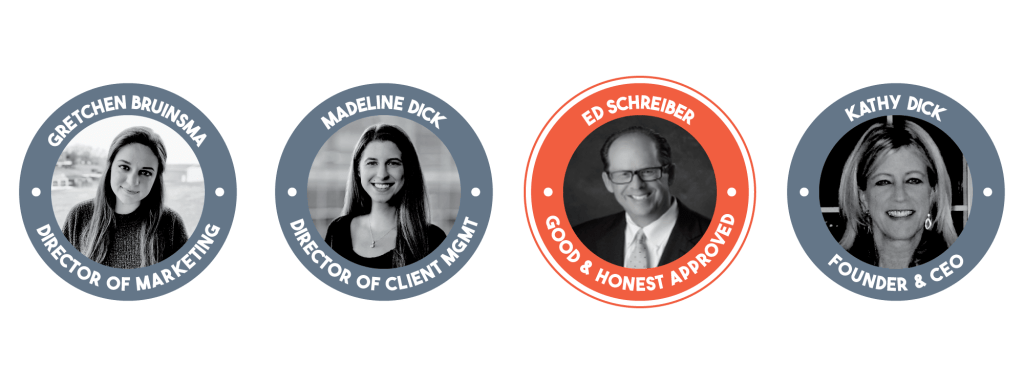
Ed Schreiber began his career at the Office of the Comptroller of the Currency (OCC) in Denver, CO. and worked in numerous locations during his 19 year career with the OCC. He later went on to serve as the Chief Risk Officer for multiple publicly traded companies. Currently, Ed teaches as an adjunct professor in the finance department at the University of Utah. He and Kathy share a background in risk management, a passion for public service, and a love of fishing.
During our conversation with Ed and Kathy, we learned so much about how working in the government can benefit someone seeking a career in risk management, and the skills and expertise needed to thrive in the financial services industry. Read on to find out which professional skill is becoming a lost art; whether the term “patience is a virtue” is an exaggeration; what technical skill a young risk professional should add to their curriculum; and, most importantly, the answer to the question: would a trout take down a mouse?
The below interview has been edited for length and clarity.
Gretchen Bruinsma: You both began your finance career in government and then moved to the private sector. What are the main benefits of this career path?
Kathy Dick: One of the main reasons that I began my career in government is because I grew up in a family that was very committed to public service. My dad was a state senator and served in the U.S. Army. He instilled in all his children that we owe service to our community. I admit that I didn’t fully appreciate this when I began working in the government, but I grew to appreciate later the importance of working to protect peoples’ financial assets. This same mission exists in the private sector, but I think that working for a government agency that develops rules and regulations helps a person better appreciate the importance of compliance.
An additional benefit for me of this career path is also a lesson I learned later in life. The government matters so much to our lives. Ed and I first met in Washington, D.C., and the dynamics that start there can have a very long-lasting impact on our country, our communities, and ourselves individually. Understanding and valuing the way Washington D.C. works is a lot easier when you work within it than if it’s just an ancillary part of your life.
Ed Schreiber: I run a somewhat parallel background to you, Kathy. I was raised in a military family. My dad served 32 years in the U.S. Army – I was born in Germany and graduated high school in Korea. Regarding the government’s role in protecting peoples’ financial assets, I strongly agree in that mission and believe that those same values were instilled in me while being raised in a military family.
From a career standpoint, for me personally, the 19 years that I spent with the OCC gave me the training needed to accomplish things that I would not have been able to otherwise when later serving as the Chief Risk Officer for two publicly traded companies. Had I not spent those years learning at the OCC and in the government, I wouldn’t be as good of a person or as good of a banker.
I recommend beginning your career as a regulator if you are interested in working in banking or finance. It’s a great way to get a solid education and establish great fundamentals; and you’ll likely leapfrog people who started in their careers directly in banking.
Kathy: That’s a great point, Ed, because you have articulated the importance of gaining breadth of experience which came with our careers at the OCC. You see so many different institutions. You see range of practice. You see the good, the bad; and you see cycles. I completely agree with your view that we learned so much more in government than we would have if we’d just started in any specific institution. So much of risk management is about analyzing risk and reward and using data and information to make sound decisions when opportunities arise. Our regulatory careers gave us solid footing on which to build successful careers in risk management.

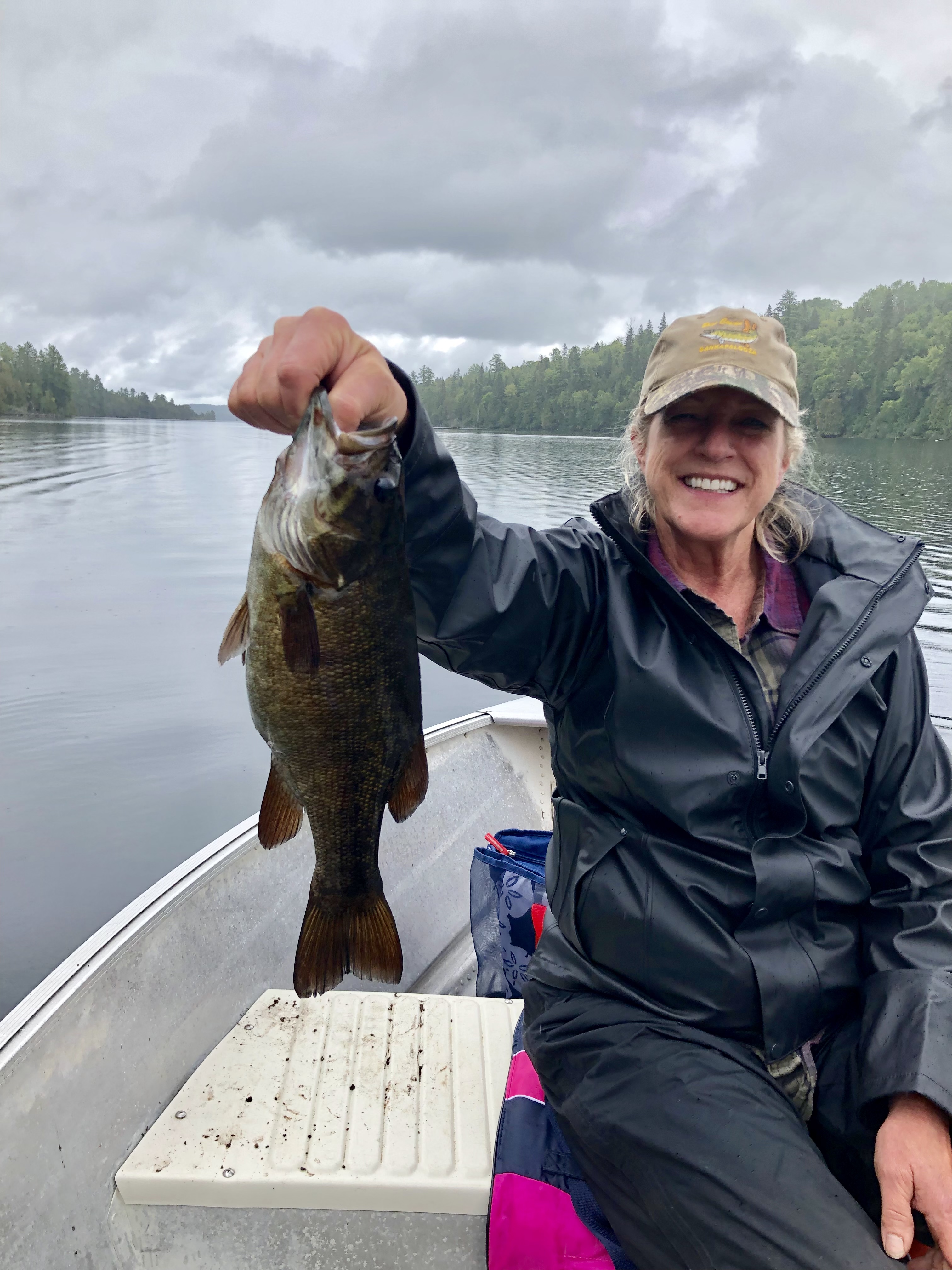
Left: Ed Schreiber in Christmas Island with a bonefish.
Right: Kathy Dick in Quebec, Canada with a large mouth bass.
Gretchen: What is something you wish you knew at the start of your career? If you were starting your career now in 2022, what is one professional skill that you would learn for a competitive edge?
Ed: I’ll start with the second question. Critical thinking is a lost art. The way students today are taught, and in the way some companies operate, critical thinking no longer exists. I think of it in terms of “how do the dominos fall?” If you’re going to make a decision that will solve for something, that decision will also probably impact several other things along the way. The critical thinking element allows you to determine “if I do this, what will all the implications be? And, if this decision doesn’t go the way I intended, what’s my backup plan?”
Enhanced critical thinking will lead you to make far better decisions for yourself personally as well as for better decisions within your company. I truly believe that if it was taught better in school it would give young professionals a great competitive edge.
Another thing that I wish I knew at the start of my career would be to listen to people when they say that “patience is a virtue.” That saying is an understatement. Patience and critical thinking are a combination that will lead you to being viewed so positively; and your career will advance much faster than those who lack those two critical skills.
Kathy: This answer is going to be very hard to follow! I’ll start by saying that I agree with Ed.
In addition, one skill that I wish I had now, but didn’t put a strong focus on during my career, is data science. I believe that so much of the future is going to involve people using data to find opportunity and hopefully to also avoid unwarranted risk. Data alone won’t be able to do that, you also need good judgement; but I do think that those who have good data and know how to use it are going to be at an advantage going forward.
One thing I wish I would have known early in my career is to be comfortable taking risks. I think that young people today are a lot more willing to say, “I’m going to take a chance; and if it doesn’t work that’s okay, I can rebound.” I didn’t have that confidence early on in my job, and in hindsight I wish I was as open-minded as I am now earlier on in my career.
Madeline Dick: Are there any mottos that you have (or particularly appreciate) when it comes to risk management? This question is open to one-liners as well as concepts!
Kathy: I learned an invaluable risk management lesson at the OCC when I was running the Treasury and Market Risk Group. I was working with my team on developing training for our capital markets examiners and we focused our sessions on the importance of using revenue and profitability to alert examiners to early detection of risk. To paraphrase, the mantra was something like, risk isn’t just an issue that comes up when you have losses. For example, bankers and examiners can quickly identify risk when they see credit problems in a loan book but may underestimate the risk of a business or desk that is making lots of money. People often lose sight of the proven relationship between risk and reward. Risk management is about a measure of volatility. If some activity is making a lot of money, it is also highly risky. The key is knowing what risk is being assumed to generate large profit and what risk mitigants might be available, if needed.
Ed: Most of the people who have worked for me know that I can be a little sarcastic, and I have a lot of one-liners. So, if someone came to me with a question, instead of saying no I would look at them and say, does a chicken have lips or does a snake have hips? Or, if someone had some good luck, I could say, well yeah, even a blind squirrel occasionally finds a nut. Anyone who’s worked for me would just shake their head.
You manage risk, you don’t preclude it, and it needs to be balanced. I use this motto in my teachings, you manage risk so that when a credit or economic downturn happens, you’re a positive outlier through the cycle. That’s what managing risk really means. Banks that do things right through the course of the cycle will have the capital and the means to buy the banks that don’t. The positive outlier is critical, and it’s about managing risk but taking risk at the same time. And, deciding when to alter your course to pull back or put the pedal down slightly.
A bank must keep three metaphorical legs of a stool level to the ground, the legs representing risk, overhead, and income production. Over time, those legs will get out of balance. For example, when the economy is going up and sales are taking off, you may not need to have a thumb down on the scale with regards to risk, but you’ll want to hit it down before the cycle peaks.
The heartbeat of a bank is lending. It’s kind of morbid, but I use this in my class as a comparison: when you die, it doesn’t matter what you die of, at some point your heart stops. In banking, the equivalent is lending. You can mess up compliance, you can mess up interest rate risk, but banks will fail if you mess up credit.
So, understand the balance sheet, where the most risk exists – which is typically in the lending portfolio, then in the investment portfolio, and interest rate risk comes behind – and concentration management. If you get that right and you understand risk, then you can apply true stress testing.
Dodd-Frank and CCAR really forced banks to deal with true stress testing and improve the quality of their data. Stress testing tells you, if my strategy is X and my risk appetite is Y, then I need Z capital. It can explain if the strategy or risk appetite is wrong. Stress testing became, I think, the right tool to manage a balance sheet by and to figure out how to make it through a downturn.
Kathy: One thing that your comments prompted for me, is that with good data you can appreciate that there are different ways to put your foot on the pedal and adjust your course, it’s not binary decision-making. Back in the days when we started our careers, credit risk management was more black and white – you either repaid or didn’t and the bank foreclosed on a loan. But smart bankers, as Ed knows firsthand, can use several data sources and tools to manage credit opportunities along a spectrum of risk, including economic forecasting, financial models and restructuring practices.
Ed: It’s a perfect analogy. Banks have gotten a lot better at it, but you still see bankers making mistakes. If you look back to the last big downturn, a few European banks were buying up collateralized debt obligations that were produced in the United States and didn’t understand the risk if it buckled.
Stress testing makes you rethink how you manage risk. Stress testing models are a tool that can help guide and inform decisions, but they are only a tool and can’t be leveraged to manage every risk management decision. For example, all the models on credit that banks have for stress testing could not have predicted, and did not predict, what happened in the industries with the COVID pandemic. The models blew out and could not handle it. When this happens, you need to consider model overrides and rethink how that model should be tweaked to work more effectively.
So, here’s a practical example, say you have a concentration in lending in multifamily and you see that the market is being overheated and it’s being driven by cap rates. When cap rates on multifamily get down around 3 to 4%, something is wrong. As a banker, you could stress test that book using models to risk rate the risk in loans and stay away from the weakest pass grade. Say, if it’s a 1-10 scale, you only lend into multifamily 8 or better. So, if there’s a downturn, that risk rating will, by default – no pun intended – have a better loan-to-value, a better debt service, etc. If the market goes down, those loans were far better because they can absorb the downturn.
However, I can guarantee you that when decisions were made to adjust the underwriting or the risk grades or the levels that you want to take, you impact lenders’ livelihoods. Bonus plans are partially driven on volume and when you cut a lender’s volume back, they run out of humor, as they should. So, you make those decisions understanding the impact you have on everybody, but ultimately doing what’s right for the company. That tension level between the producers and the risk staff will always be there. And let’s just say it gets elevated when you decide to start making some changes because of what potentially could happen.
Madeline: That provides a segue to my next question… Regulators and banks are focusing more on environmental, social and corporate governance (ESG) strategies, do you have any thoughts on these priorities?
Ed: Here’s a huge dilemma for the banking industry. At a Risk Management Association (RMA) meeting two years ago, I had a fireside chat with a leading attorney about how to look at ESG from risk and legal perspectives, so a couple things come to mind.
Let’s take a large US bank as an example, this one has a large concentration in oil and gas lending. In fact, a number of large banks have concentrations in oil and gas lending. Despite all the pressures, do we really expect any bank to abandon the oil and gas lending business? I don’t think so, and nor should they if you think about the economic impact, this would have devastating economic impact to states like Texas, Oklahoma, and Pennsylvania and we can’t expect banks to completely abandon those industries. Rather, these banks and the industries need a plan.
I think that’s reasonable, but the current SEC requirements, if implemented, will place a huge burden on the publicly traded banks in the country. Not only will banks have to track the lending they do, if it’s in oil and gas or other areas, but they will have to track their customers.
Again, politics aside, I think the country needs to reconsider solar as the answer. Solar panels do not have 100% efficiency. If you took, for instance, the whole Mojave Desert and made a solar field, it would generate enough heat back in the atmosphere to change it by almost 2 degrees Celsius. Because of the lack of efficiency of the panels, it can only absorb a certain amount of energy and the rest gets bounced back up. If they’re too big, these big solar fields will alter and heat up the Earth too much – but everybody thinks solar is the answer. I think it’s a partial solution, but it’s not the answer.
Nobody is really dealing with all the mining that must be done to get the materials needed to make electric vehicles. We know that over time, mining has displaced indigenous communities. That huge environmental impact isn’t being widely discussed. I just read today that Toyota is looking at hydrogen-based vehicles as a better solution.
Most US banks have pulled out of the coal industry, but the world is still global. China just put up, I think, 15-20 coal plants. India is dealing with pollution to the extent that in Delhi and Mumbai, airports have been shut down due to low visibility for landing planes. These countries are behind the US from an industrial revolution standpoint, and who are Americans to say other nations cannot industrialize their countries, regardless of cost from an environmental standpoint? There are politics involved.
No matter what people think, the earth is warming based on the climate cycle, the whole doggone place was under an Ice Age at one point, but we are absolutely speeding it up at a pace that is not sustainable. ESG really needs to be thought about differently – solar, electric and wind are not the answer but that’s where everyone is going. They have repercussions in themselves. ESG could force better discussions, but the way it’s structured, I think it’s misled where it’s going. I think ESG is well intended, but speaking of critical thinking, it has some potential repercussions and unintended consequences that could be very dangerous.
Kathy: I agree with Ed that it’s complicated. And I also appreciate that many people are actively engaged in trying to understand and take action to address ESG concerns because they absolutely impact a favorite pastime that Ed and I share… fishing!
Gretchen: You both enjoy fishing, which requires a lot of patience and strong observation skills. Would you say those skills are important within the financial service industry as well?
Ed: The irony of my love of fishing is that most people learn fishing from their parents. It’s a passion that’s handed down to them. In our house, it’s the opposite. Our son, Cole, was a professional snowboarder, and the group that he worked with would go fly fishing to relax. We actually learned fly fishing from our son – not the other way around. We go with him to Green River, UT and he guides us down the river with a decent amount of rapids while we fly fish in the front and back of the drift boat – it’s a lot of fun.
What I will tell you is that learning a new skill is always valuable. It’s important to be open to new things that may help you be more efficient because you can apply those skills in almost anything you do. Fishing in and of itself is an adventure – particularly this upcoming fishing trip my family is taking to Cuba. When you’re out there, saltwater fly fishing comes at you fast. Everything moves and it moves fast. So, being observant, patient, and paying attention to the details is critical to figuring it all out.
Fishing does teach you to be more observant, which is a skill that you can apply to any job. We discussed critical thinking earlier, which is also an important element of fishing because it helps you determine where the fish are likely to be based on factors like the environment, tide, and barometric pressure.
With fishing, the skills you learn transition quite well into real life – and it’s just real fun to do.

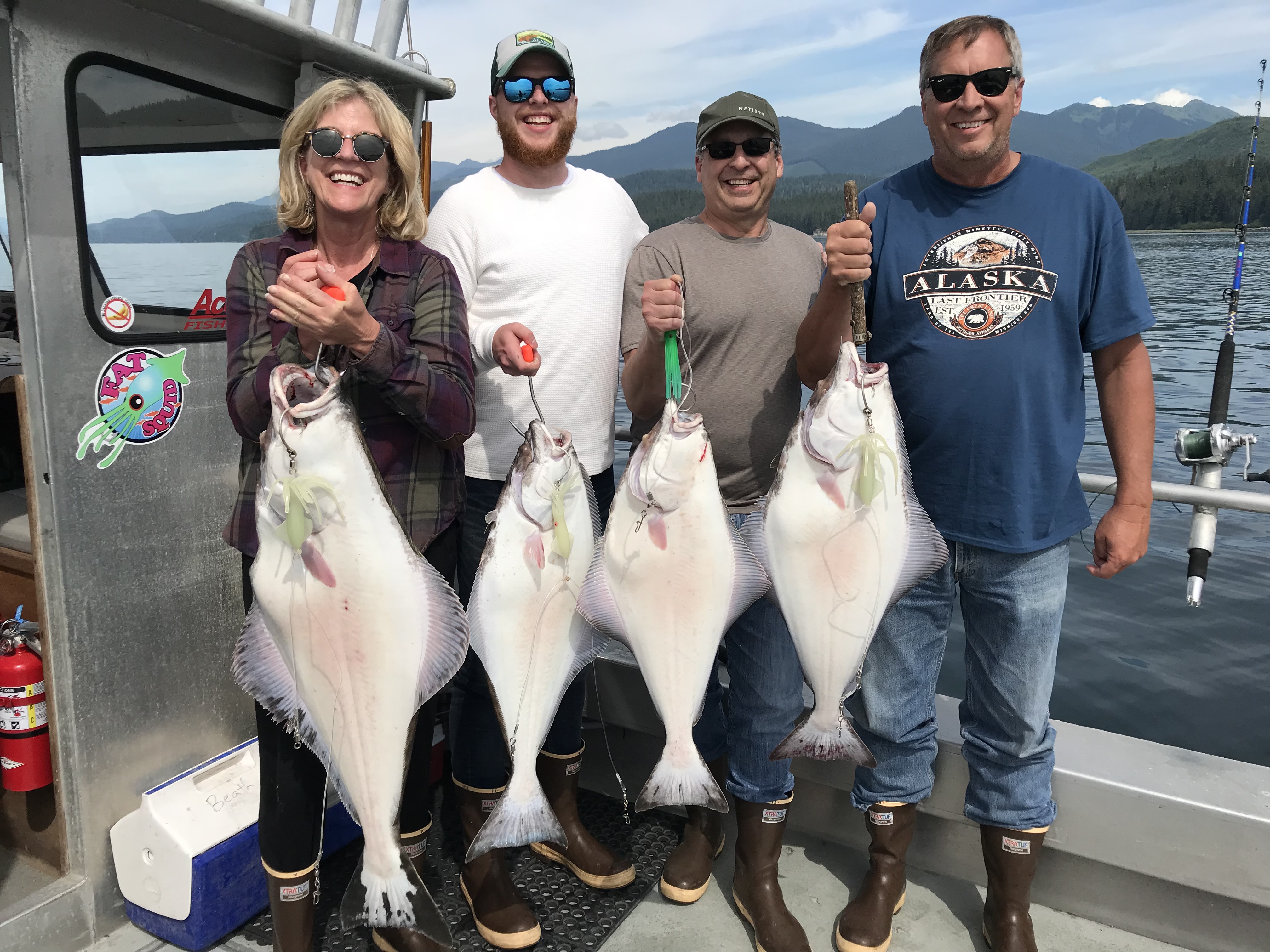
Left: Ed’s son, Cole, in Christmas Island with a trigger fish.
Right: Kathy with her son, husband, and brother-in-law in Angoon, Alaska with halibut.
Gretchen: Favorite place to fish? And what’s your proudest catch?
Kathy: My husband, Jeff, and I have gone to Alaska a couple of times, which is my favorite place to fish. My favorite catch there was a halibut. Halibut are typically in very deep waters. On our last trip, when our guide told me, “Kathryn, you have a fish, start reeling it in,” I started to do the math and quickly realized that I had not applied strong risk management skills before eagerly beginning my love affair with halibut. This fish was 400 feet below me and they’re flat, which meant much more resistance as I was pulling it up through the water. A few times someone on the boat would ask me if I needed any help, to which I resolutely responded, “Oh no. This fish is being brought up by me.” But I did have to keep switching arms! When I finally got him in, I had the additional pleasure of realizing that I had caught the biggest halibut of our group.
I’d go back to Alaska every summer if I could.
Ed: The Green River in Utah is gorgeous and is my favorite domestic place to fish. The water is crystal clear, and people refer to it as “the aquarium”. Outside of the US, it’s a tossup between the beautiful Christmas Island, which is 3.5 hours south of Oahu in the middle of the Pacific Ocean, and Cuba which is spectacular.
One of my proudest catches was a brown trout. Brown trout were put on this world to eat. They’re eating machines and they’re fighters. If you want to bet somebody some money and win, tell them that you want to wager that a fish that loves insects, a brown trout, can take down a mouse. Most people will gladly take that bet because very few people know that mice can swim, and that brown trout will absolutely eat a mouse.
In a heartbeat.
(We checked it out and confirmed that a trout will not hesitate to take down a mouse – although it doesn’t always succeed. See for yourself Here.)
I Am Salt of the Earth is a quarterly blog series where we chat with good and honest people about the financial service industry, career advice, life advice, and so much more. Each quarter we have the pleasure of speaking with someone who is accomplished, authentic, and, most importantly, “salt-of-the-earth”. Being able to share these thoughtful insights with you furthers our mission to be a trusted and beneficial partner within our community.
To learn more about the services we offer, Click Here.
To read additional I Am Salt of the Earth articles, visit soteconsultinggroup.com/blog.
 Salt of the Earth Consulting